Cooling jobs market opens door for rate cut

The July jobs report could give Federal Reserve officials a sense of déjà vu. Last year, officials decided against cutting interest rates at their July meeting, but an employment report 2 days later suggested that the labor market wasn’t as strong as it looked. Officials responded by cutting rates by half a percentage point.
The July jobs report came in weaker than expected, signaling a slowdown in the labor market. This is good news for those wanting the Federal Reserve to lower interest rates, with expectations for a September rate cut jumping in reaction to this morning’s data.
According to the Bureau of Labor Statistics, nonfarm payrolls rose by 73,000 in July, missing economists’ estimate for 100,000 new jobs. Figures for June were lowered by 133,000 to 14,000, while May’s jobs growth was also downwardly revised (by 125,000 to 19,000).
Job gains in July were seen in health care (+55,000) and social assistance (+18,000). However, federal government jobs declined by 12,000, and are now down by 84,000 since January.
The unemployment rate, which is calculated from a separate survey, ticked up to 4.2%. The data also showed that wage growth was up 0.3% month over month in July and 3.9% year over year.
“Just two days after the conclusion of this month’s Fed meeting, suddenly the dual mandate is back on the table,” says Chris Zaccarelli, chief investment officer for Northlight Asset Management. “With this morning’s payroll miss – and the downward revisions that came with it – the Fed will again need to balance a slowing job market with inflation, which isn’t slowing fast enough.”
Futures traders have certainly changed their tune on a September rate cut following the July jobs data. According to CME FedWatch, odds that the Fed lowers the federal funds rate by a quarter-percentage point at its next meeting in September have jumped to 76% from 38% one day ago.
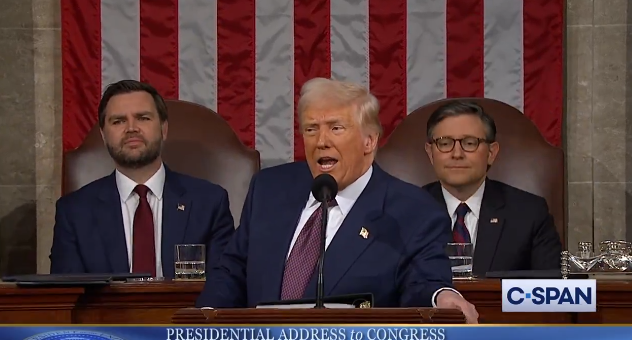
President Trump has long asked Chairman Powell to lower interest rates. With this new jobs report, which showed below expected growth, he might finally get the lower rates he has been asking for.
Related Posts

President Trump endorses Netanyahu for reelection in Israel
Is Republican voter enthusiasm fading around the nation?