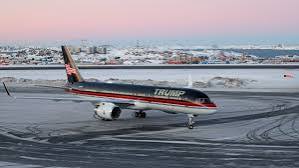
Trump’s actions are sending shockwaves around the world. China looks to capitalize

The leaders of three of the world’s four most powerful nations will meet in China this weekend to discuss how to react to the upending of the international order wrought by the fourth: the US under President Trump.
Chinese leader Xi Jinping will welcome Russian President Vladimir Putin and Indian Prime Minister Narendra Modi. President Trump has been trying to get a peace negotiated between Russia and Ukraine, and the US has long courted India as a strategic ally and bulwark against China.
Peace between Russia and Ukraine still looks to be far away, although more talks are continuing to happen. President Trump’s tariffs on India have angered the country, and China is attempting to use this as an opportunity to peel India away from the US’ orbit.
And this is something that China is attempting to do not just with India, but writ large. Whether it is tariffs, or calling out allies for free riding off of US military protection, many countries are rankled by Mr Trump’s actions, and China is hoping that this provides them the opportunity to wrestle them away from the US.
While China may have success at some level, the world has largely woken up to the problematic nature of Beijing’s actions. It is unlikely that any country not already somewhat in Beijing’s orbit will fall into China’s embrace.
What might happen is countries hedging their bets; diversifying their political and especially economic ties between the US and China, so that the US doesn’t have so much power and influence over them. This would not be optimal for Washington, but is unlikely to change the fundamental contours of power in the world, where the US remains the top power.
It should be noted that there is an element of uncertainty on this topic, because President Trump himself is so unpredictable; he could do anything from keeping the Western allies and others onside, to doubling down and causing even more of a rift between the US and other countries.
This topic is often one couched in buzzwords and implications. The world “moving away” from the US, “China rising,” and countries “diversifying their trade and diplomatic options” are terms that have grains of truth, but are broad, unspecific, hard to disprove, and don’t necessarily imply anything drastically changing.
If one were to imagine the Great Power game as the US vs China, Trump’s actions are almost certainly not going to stop the US from staying ahead of China. They may move things on the margin, which will matter to Washington and Beijing, and might be detrimental to Washington, but the chances that they ignite a changing of the guard of top world power is very slim.
It is likely that President Trump is accelerating trends that were going to happen anyway. That is that the American public no longer wants the US to do all the things it has done since the end of World War 2; have completely open trade, be the world’s policeman, and let other countries in a sense free ride off our protection, in exchange for loyalty.
The framework must change. President Trump recognizes this. But we do not yet have a replacement framework, so this transition period is one of uncertainty.
Related Posts

President Trump endorses Netanyahu for reelection in Israel
What are American soldiers doing in Ecuador?